
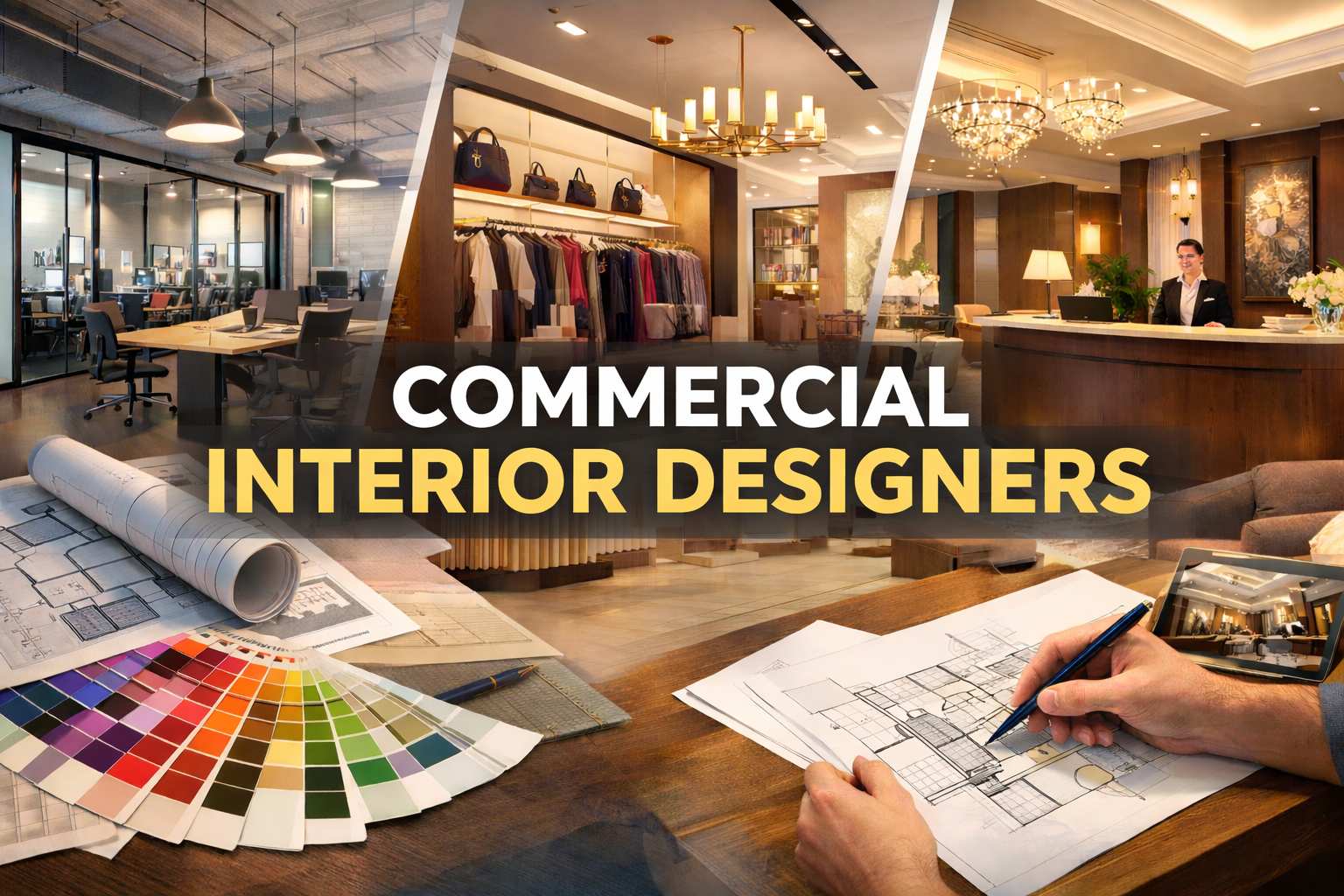
Commercial Interior Designers: Who They Are, What They Do, and Why They Matter More Than Ever
Walk into a thoughtfully designed office, a premium retail store, or a welcoming hotel lobby, and you’ll immediately sense the difference. The lighting feels right. The layout makes sense. The space reflects the brand. It works — not just visually, but functionally. Check Commercial Interior Designers under the Article.
Behind such spaces are commercial interior designers — professionals who combine creativity, technical knowledge, psychology, and project management to shape business environments that truly perform.
But what exactly do commercial interior designers do? Why are they important for modern businesses? And how do they influence productivity, branding, and customer experience?
Let’s explore in depth.
What Are Commercial Interior Designers?
Commercial interior designers are specialists who design interiors for business and public spaces rather than private homes. Their work spans:
- Corporate offices
- Retail outlets
- Restaurants and cafés
- Hotels and hospitality spaces
- Healthcare facilities
- Educational institutions
- Co-working environments
Unlike residential designers, commercial interior designers must think beyond comfort and aesthetics. They design spaces that must function efficiently for employees, impress clients, support workflows, comply with regulations, and endure heavy usage.
In fast-growing commercial hubs like Greater Noida, where businesses are expanding rapidly, the demand for professional commercial interior design has grown significantly.
What Do Commercial Interior Designers Actually Do?
If you’re asking through voice search, here’s the simple answer:
Commercial interior designers plan, design, and manage business spaces to make them functional, safe, brand-aligned, and efficient.
Now let’s break that down.
1. Understanding Business Goals
The process begins with understanding the client’s vision and business model. A commercial interior designer asks important questions:
- What does your company do?
- How do employees work?
- What impression should customers have?
- What is your growth plan?
Design decisions are driven by these answers.
For example:
- A tech startup may require collaborative open workspaces.
- A law firm may need privacy-focused layouts.
- A retail brand may focus on product display psychology.
Experienced firms like Arch Stone Interiors often begin projects with deep consultations to align design strategy with business goals — ensuring the space supports operations rather than complicates them.
2. Strategic Space Planning
One of the most important roles is space planning.
This includes:
- Traffic flow management
- Zoning (work areas, meeting rooms, lounge zones)
- Emergency exit placement
- Accessibility compliance
- Efficient workstation arrangement
Poor space planning can lead to:
- Congestion
- Reduced productivity
- Safety risks
- Uncomfortable work environments
Good planning improves:
- Collaboration
- Movement efficiency
- Customer navigation
- Operational clarity
In commercial developments across Greater Noida, well-planned offices and retail spaces are increasingly seen as business assets rather than expenses.

3. Brand Integration Through Design
Commercial interior designers are visual storytellers.
They translate brand identity into physical space using:
- Color psychology
- Material selection
- Lighting design
- Furniture style
- Spatial layout
For instance:
- A luxury brand may use marble finishes and warm lighting.
- A creative agency may opt for bold colors and flexible furniture.
- A healthcare clinic may prefer calming tones and natural textures.
Design becomes a silent brand ambassador.
Also Check Role of a Commercial Interior Designer
4. Technical Knowledge & Compliance
Commercial interior designers must understand building regulations and safety standards.
This includes:
- Fire safety systems
- Accessibility laws
- Structural limitations
- Electrical and HVAC coordination
- Building code compliance
This technical expertise separates commercial designers from residential designers.
They work closely with:
- Architects
- Structural engineers
- MEP consultants
- Contractors
Ensuring that design ideas are not just beautiful — but buildable and compliant.
5. Material Selection for Durability
Commercial spaces face heavy foot traffic. Materials must withstand wear and tear.
Designers consider:
- Maintenance requirements
- Longevity
- Cost-effectiveness
- Environmental impact
For example:
- Commercial-grade flooring
- Scratch-resistant laminates
- Ergonomic office furniture
- Acoustic panels for sound control
Durability protects investment and reduces long-term costs.
6. Human-Centered Design Approach
A truly skilled commercial interior designer designs for people — not just for visual appeal.
They consider:
- Employee comfort
- Customer journey
- Psychological impact
- Ergonomics
- Lighting comfort
- Noise management
Modern offices increasingly prioritize:
- Natural light
- Biophilic design elements
- Collaborative spaces
- Wellness-focused layouts
These features improve productivity and well-being.
7. Project Management & Coordination
Commercial interior designers do not work alone.
They coordinate with:
- Contractors
- Vendors
- Suppliers
- Carpenters
- Electricians
- Site supervisors
They:
- Review material samples
- Inspect installation quality
- Manage timelines
- Monitor budgets
- Solve on-site challenges
Strong coordination prevents delays and costly mistakes.
Firms such as Arch Stone Interiors often emphasize structured execution systems to maintain design integrity from concept to completion.
8. Budget Planning & Cost Optimization
Commercial interior designers help clients make smart financial decisions.
They:
- Prepare cost estimates
- Compare vendor quotations
- Suggest alternative materials when needed
- Prevent unnecessary spending
A good designer does not overspend. Instead, they allocate budget strategically — focusing on high-impact areas.
9. Technology & Modern Tools
Today’s commercial interior designers use advanced tools like:
- AutoCAD
- 3D rendering software
- Revit
- Virtual walkthroughs
- Space simulation tools
These tools allow clients to visualize projects before execution begins.
This reduces uncertainty and improves decision-making.
10. Sustainability & Future-Ready Design
Sustainability is no longer optional.
Commercial interior designers now incorporate:
- Energy-efficient lighting
- Eco-friendly materials
- Low-VOC paints
- Water-saving fixtures
- Waste reduction strategies
Sustainable design benefits both the environment and long-term operational costs.
In developing commercial areas like Greater Noida, businesses are increasingly adopting green building principles.
Why Businesses Need Commercial Interior Designers
Here’s a quick summary:
Commercial interior designers help businesses:
- Improve productivity
- Enhance customer experience
- Reflect brand identity
- Ensure safety compliance
- Optimize space usage
- Increase property value
In competitive markets, design becomes a strategic advantage.
Common Misconceptions About Commercial Interior Designers
“They only decorate spaces.”
False. They plan, coordinate, manage, and solve complex spatial problems.
“They are expensive.”
In many cases, they save money by avoiding costly mistakes.
“Any residential designer can do commercial projects.”
Not necessarily. Commercial design requires regulatory knowledge and technical expertise.
How to Choose the Right Commercial Interior Designer
When selecting a commercial interior designer, consider:
- Portfolio of completed projects
- Experience in your industry
- Understanding of compliance requirements
- Transparent pricing
- Communication skills
- Project management capability
Local expertise can also be valuable. Designers familiar with regional regulations and market conditions — like those working across Greater Noida — may navigate approvals more efficiently.
FAQ
What is a commercial interior designer?
A commercial interior designer plans and designs business spaces to ensure they are functional, safe, brand-aligned, and visually appealing.
What industries do commercial interior designers work in?
They work in offices, retail stores, hotels, healthcare facilities, restaurants, and educational institutions.
Why are commercial interior designers important?
They improve productivity, customer experience, brand identity, and regulatory compliance.
How long does a commercial interior project take?
It depends on project size, complexity, and approval processes.
The Human Side of Commercial Interior Design
Beyond plans and materials, commercial interior designers shape experiences.
They design:
- Where employees spend most of their day
- Where customers make buying decisions
- Where guests form lasting impressions
A well-designed commercial space can:
- Inspire creativity
- Reduce stress
- Increase sales
- Build trust
This human impact is what makes the profession meaningful.
Final Thoughts
Commercial interior designers are strategic thinkers, creative problem solvers, and execution leaders. Their work sits at the intersection of art, engineering, psychology, and business.
As cities expand and commercial infrastructure grows — especially in emerging hubs like Greater Noida — the importance of well-designed business spaces continues to rise.
Companies that invest in thoughtful commercial interiors often see returns in productivity, employee satisfaction, and brand strength.
Professionals and firms such as Arch Stone Interiors illustrate how commercial interior design can be both aesthetically refined and operationally efficient — blending creativity with structured execution.
Ultimately, commercial interior designers don’t just shape spaces.
They shape how businesses function and how people feel within those spaces.
This is it in this Article Check more Details About Interior Design on Arch Stone Interiors.