
What Does a Commercial Interior Designer Do?: A Complete Guide to Their Role, Responsibilities, and Real-World Impact
When you walk into a well-designed office, a thoughtfully arranged retail store, or a calming healthcare clinic, you may not immediately think about the person behind the layout. Yet every functional corridor, ergonomic workstation, inviting reception area, and strategically lit product display is the result of careful planning. Check What Does a Commercial Interior Designer Do Under the Article.
So what does a commercial interior designer actually do?
In simple terms:
A commercial interior designer plans, designs, and manages the creation of functional, safe, and brand-aligned spaces for businesses and public environments.
But the full answer is much deeper. Their work combines creativity, psychology, technical expertise, project coordination, and business strategy. Let’s explore this role in detail.
Understanding Commercial Interior Design
Before diving into responsibilities, it’s important to clarify what “commercial” means in this context.
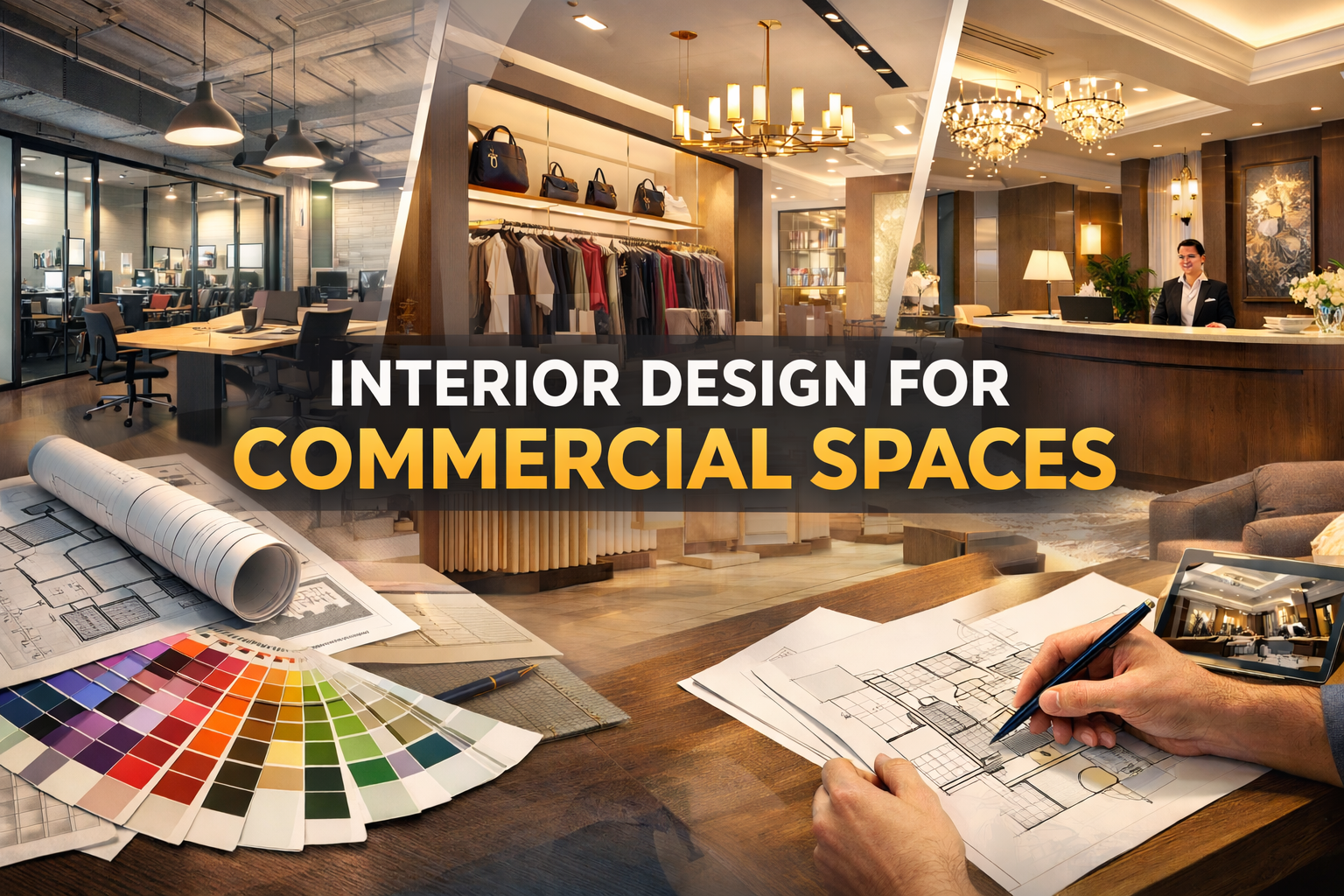
Commercial interior design focuses on non-residential spaces such as:
- Corporate offices
- Retail stores
- Restaurants and cafés
- Hotels
- Healthcare facilities
- Educational institutions
- Co-working spaces
Unlike residential design, which centers on personal comfort, commercial design prioritizes efficiency, compliance, branding, and user experience.
In growing business hubs like Greater Noida, commercial development is accelerating. As companies expand, the demand for structured and professionally designed commercial spaces continues to rise.
The Core Responsibilities of a Commercial Interior Designer
1. Understanding the Client’s Business and Vision
The first responsibility of a commercial interior designer is listening.
Before creating layouts or selecting materials, they must understand:
- What does the company do?
- How many employees use the space?
- What impression should customers have?
- What workflows must be supported?
- What is the brand identity?
For example:
- A tech startup may need open collaboration zones.
- A law firm may require private cabins and formal aesthetics.
- A retail store may prioritize product visibility and customer flow.
Design must align with business objectives. Experienced firms like Arch Stone Interiors begin projects with detailed consultations to ensure every design decision supports operational goals.
2. Strategic Space Planning
Space planning is one of the most critical aspects of the job.
A commercial interior designer determines:
- How people move through the space
- Where departments should sit
- How to maximize usable square footage
- Emergency exit placement
- Accessibility requirements
Poor planning can create confusion, wasted space, and reduced productivity.
Good planning improves:
- Workflow efficiency
- Communication between teams
- Customer navigation
- Safety compliance
In rapidly expanding regions like Greater Noida, where commercial properties are being developed quickly, efficient space utilization is especially important.

3. Creating the Design Concept
Once functional needs are understood, the designer develops a cohesive concept.
This may include:
- Mood boards
- Color schemes
- Lighting concepts
- Furniture style direction
- Material palette
The concept sets the tone for the entire project.
For instance:
- A luxury retail outlet may use warm lighting and rich textures.
- A wellness clinic may incorporate soft tones and natural elements.
- A creative agency may adopt bold colors and flexible layouts.
Commercial interior designers translate abstract brand values into physical space.
4. Integrating Brand Identity into the Interior
A commercial space is a silent ambassador for a brand.
Designers ensure that:
- Colors reflect brand guidelines
- Logo placement is subtle yet impactful
- Spatial themes align with company culture
- Materials reinforce brand positioning
For example, a premium brand might use marble, brass finishes, and soft ambient lighting. A sustainability-focused company might use recycled materials and biophilic design.
Brand integration is one of the most strategic parts of the role.
5. Ensuring Compliance and Safety
Commercial interior designers must understand building codes and legal regulations.
They ensure compliance with:
- Fire safety standards
- Emergency exits
- Accessibility guidelines
- Electrical and HVAC systems
- Structural safety requirements
This technical knowledge separates commercial designers from residential ones.
Non-compliance can result in fines, operational delays, or safety hazards. Designers act as safeguards against such risks.
6. Selecting Durable Materials and Furniture
Also Check Role of a Commercial Interior Designer
Commercial environments experience heavy daily use.
Designers choose materials based on:
- Durability
- Maintenance requirements
- Budget constraints
- Aesthetic impact
- Environmental sustainability
For example:
- Commercial-grade flooring
- Ergonomic office chairs
- Acoustic wall panels
- Scratch-resistant laminates
Every selection balances beauty with practicality.
7. Managing Budgets and Costs
A commercial interior designer does not simply design — they plan financially.
They:
- Estimate project costs
- Compare vendor quotations
- Suggest alternatives if needed
- Allocate budget strategically
Smart budgeting prevents overspending and reduces unexpected expenses.
In competitive markets like Greater Noida, cost efficiency is often as important as visual appeal.
8. Coordinating with Contractors and Vendors
Commercial interior projects involve many professionals:
- Architects
- Structural engineers
- Electricians
- Carpenters
- HVAC specialists
- Furniture suppliers
The designer acts as the central coordinator, ensuring that:
- Designs are implemented accurately
- Timelines are followed
- Quality standards are maintained
Without strong coordination, projects can face delays and cost overruns.
Firms such as Arch Stone Interiors often emphasize structured execution and vendor collaboration to maintain design integrity.
9. Supervising Project Execution
During implementation, the designer may:
- Conduct site visits
- Approve material samples
- Review installation progress
- Solve on-site challenges
Unexpected issues are common in construction. A commercial interior designer must adapt quickly and find practical solutions without compromising design intent.
10. Enhancing User Experience
Commercial interior design is deeply human-centered.
Designers consider:
- Employee comfort
- Customer journey
- Accessibility
- Noise levels
- Lighting comfort
For example:
- Proper lighting reduces eye strain.
- Acoustic treatment improves concentration.
- Clear signage enhances navigation.
A well-designed commercial space improves both efficiency and emotional comfort.
11. Incorporating Technology
Modern commercial interior designers integrate technology such as:
- Smart lighting systems
- Automated climate control
- Digital display panels
- Video conferencing zones
Technology enhances productivity and user convenience.
12. Promoting Sustainability
Sustainability is becoming a core responsibility.
Designers now prioritize:
- Energy-efficient lighting
- Eco-friendly materials
- Waste reduction strategies
- Low-VOC paints
- Water-saving fixtures
Green design benefits businesses by reducing operational costs and improving indoor air quality.
Why Hiring a Commercial Interior Designer Matters
Many businesses wonder if they truly need a professional designer.
Here’s why they do:
- Prevent costly mistakes
- Ensure compliance
- Improve productivity
- Strengthen brand identity
- Optimize space usage
- Enhance employee satisfaction
Commercial interior designers add value beyond aesthetics — they improve business performance.
A Day in the Life of a Commercial Interior Designer
A typical day might include:
- Client meetings
- Reviewing CAD drawings
- Visiting construction sites
- Approving vendor proposals
- Coordinating with engineers
- Revising layouts
The role requires creativity, technical skill, and leadership.
Common Questions
What does a commercial interior designer do daily?
They plan layouts, coordinate with contractors, manage budgets, ensure compliance, and oversee execution.
Is a commercial interior designer the same as an architect?
No. Architects focus on structural design, while interior designers focus on interior space planning and functionality.
How long does a commercial interior project take?
It depends on project size, scope, and regulatory approvals.
Are commercial interior designers worth hiring?
Yes. They help prevent mistakes, improve functionality, and enhance brand image.
The Growing Importance in Emerging Business Hubs
As cities like Greater Noida continue to grow, commercial infrastructure is expanding rapidly.
Businesses now understand that:
- Workspace design affects employee retention
- Retail layout impacts sales
- Hospitality ambiance influences guest reviews
Professional commercial interior design is no longer optional — it is strategic.
Final Thoughts
So, what does a commercial interior designer do?
They:
- Listen to business goals
- Plan functional layouts
- Develop cohesive design concepts
- Ensure safety compliance
- Coordinate construction teams
- Manage budgets
- Improve user experience
They blend creativity with structure, aesthetics with compliance, and vision with execution.
In developing commercial landscapes and modern business districts, commercial interior designers play a crucial role in shaping how organizations function and how people experience space.
Companies such as Arch Stone Interiors reflect how commercial interior design can be practical, thoughtful, and strategically aligned with business needs — without losing the human element.
Ultimately, commercial interior designers don’t just design spaces.
They design how businesses live, operate, and grow within those spaces.
This is it in this article Check more Details About Interior Design on Arch Stone Interiors.