
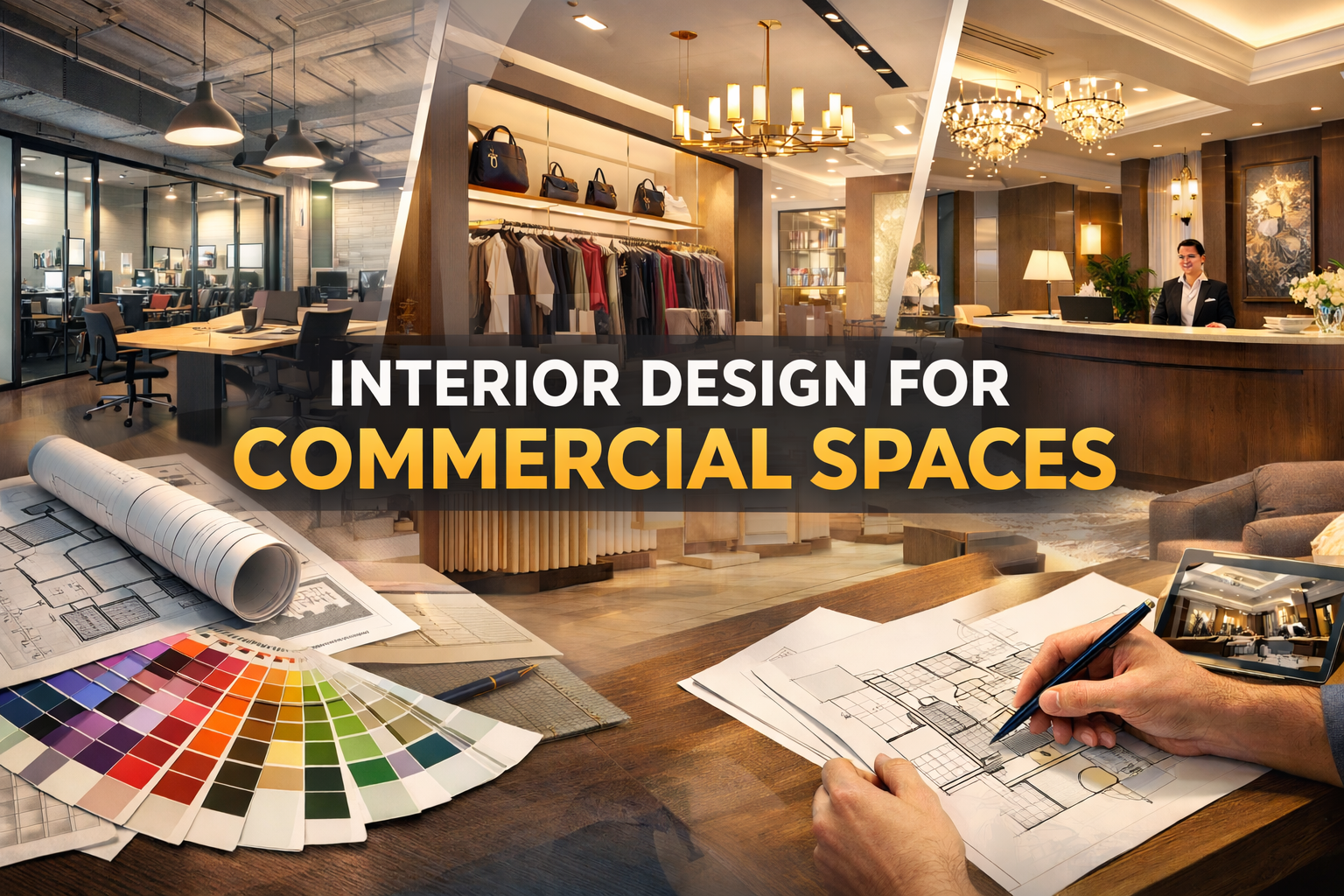
Interior Design for Commercial Spaces in 2026
Interior design for commercial spaces has evolved far beyond aesthetic appeal. Today, it’s a strategic, human-centered discipline that enhances brand identity, boosts productivity, improves customer experience, and maximizes functional utility. Whether it’s a corporate office, retail showroom, restaurant, hotel lobby, or co-working hub, thoughtful interior design is key to creating memorable and effective spaces.
In this guide, we’ll explore:
- What commercial interior design really means
- Core principles and trends shaping it in 2026
- How to plan and execute a successful commercial project
- The role of space, lighting, ergonomics, materials, and branding
- Real-world insights from Arch Stone Interiors in Greater Noida
- Practical tips for small and large businesses
Let’s begin.
1. What Is Commercial Interior Design?
Commercial interior design is the art and science of enhancing interior spaces for businesses. Unlike residential design, it must balance functionality, safety, brand identity, and a seamless experience for users — employees, clients, customers, or guests.
Key Objectives of Commercial Design
- Enhance productivity and comfort
- Reinforce brand identity
- Comply with safety and accessibility standards
- Maximize space usage
- Create memorable experiences
- Support operational efficiency
For example, a thoughtfully designed office lounge encourages collaboration, while well-planned retail interiors increase customer dwell time — leading to higher sales.
2. The Core Elements of Successful Commercial Interior Design
Whether designing a modern boutique or a corporate headquarters, five core elements define success:
A. Space Planning
Space planning ensures every square foot serves purpose. It answers key questions:
- How do people move through the space?
- Where should workstations, meeting areas, or displays be placed?
- How can flow be optimized without crowding?
Good space planning reduces clutter, enhances circulation, and anticipates future needs — especially in dynamic environments like co-working hubs or tech offices.
B. Functional Zoning
Commercial spaces work best when distinct functions have dedicated zones:
| Zone | Purpose |
|---|---|
| Reception | First impression & customer welcome |
| Workstations | Productivity & focus |
| Collaboration Areas | Meetings & discussions |
| Breakout Zones | Relaxation & informal interaction |
| Service Areas | Storage, utilities, support functions |
Each zone should feel intentional — blending flexibility with structure.
C. Lighting Design
Lighting is a powerful driver of mood, comfort, and focus.
- Natural Light boosts productivity and wellness
- Task Lighting supports focused work
- Accent Lighting highlights features or brand elements
- Ambient Lighting sets overall tone
An open-plan office in Greater Noida benefits from large windows and daylight harvesting, while a boutique café leverages warm accent lighting to create a cozy ambiance.
D. Materials and Finishes
Commercial spaces demand materials that are:
- Durable
- Easy to maintain
- Aesthetically cohesive
- Safe and compliant
From polished concrete floors to acoustic wall panels, material choice influences both performance and perception.
E. Brand Expression
Commercial interior design is silent branding — it tells your story without words.
For instance, a financial firm may choose sleek lines and muted tones for a professional aura. A creative startup might use vibrant colors and flexible layouts that reflect innovation.
3. Trending Now: 2026 Design Trends for Commercial Spaces
Design trends shift over time, often driven by technology, sustainability, and human needs. Here’s what’s leading the way in 2026:
Trend 1: Biophilic Design
Biophilia brings nature indoors — plants, natural materials, organic shapes, and daylight — improving comfort and well-being.
Questions people ask (voice search):
- “What is biophilic design in commercial interiors?”
- “How does plants in office improve productivity?”
Answer: Research shows biophilic elements reduce stress and boost creativity — vital for workplaces and hospitality spaces.
Trend 2: Flexible Workspaces
Post-pandemic work culture demands flexibility. Modular furniture, movable partitions, and adaptable meeting zones are now staples.
Trend 3: Smart and Integrated Technology
AI-enabled systems, occupancy sensors, and intuitive wayfinding enhance comfort and efficiency.
Example voice query:
- “How do smart interiors save energy?”
Answer: Smart controls adjust lighting and HVAC based on usage, lowering energy cost.
Trend 4: Sustainable & Recycled Materials
Eco-friendly design is not a fad — it’s expected. Recycled timber, low-VOC paints, and sustainable textiles are mainstream.
Trend 5: Immersive Retail Experiences
Retail spaces are no longer purely transactional — they are experiential. Digital interfaces, interactive zones, and ‘Instagrammable’ design create engagement.
4. The Interior Design Process: Step by Step
Designing commercial interiors involves multiple stages — from concept to completion.
Step 1: Discovery and Briefing
This initial phase explores:
- Client goals
- Brand personality
- Target users
- Budget and timeline
For instance, in a recent Greater Noida office project, the client prioritized collaboration zones, wellness spaces, and acoustics — setting clear expectations upfront.
Step 2: Concept Development
Here, designers craft mood boards, color palettes, and design narratives. Digital renderings help clients visualize possibilities before execution.
Step 3: Space Planning and Layout
Detailed layouts are created showing the position of walls, partitions, furniture, lighting, and equipment.
Step 4: Material Selection
Choosing material finishes, textiles, fixtures, and furniture that align with design intent, durability, and budget.
Step 5: Technical Documentation
Drawings, specifications, and engineering inputs are prepared for contractors and vendors — essential for accurate execution.
Step 6: Execution & Project Management
On-site coordination ensures timelines are met, quality is maintained, and adjustments are handled efficiently.
A real case in Greater Noida handled by Arch Stone Interiors demonstrated seamless coordination between design, supplies, and execution — delivering ahead of schedule without compromise on quality.
Step 7: Handover and Feedback
Final inspection and client walkthrough ensure satisfaction. Feedback helps refine future projects.
Also Check Role of a Commercial Interior Designer
5. Commercial Interiors by Type: Tailored Approaches
Different commercial spaces have unique design priorities. Let’s explore key typologies.
A. Offices & Corporate Spaces
Modern offices prioritize comfort, flexibility, and productivity.
Key strategies:
- Open zones + quiet pods
- Ergonomic furniture
- Acoustic dampening
- Collaboration hubs
Voice search keywords people use:
- “What is ergonomic office design?”
- “How to design a productive workspace?”
Answer: Prioritize adjustable desks, supportive chairs, natural lighting, and zoned floor plans to enhance focus and well-being.
B. Retail Stores
Retail space design is about engagement and conversion.
Best practices:
- Clear circulation pathways
- Strategic product focal points
- Sensory lighting
- Comfortable checkout zones
Real retail interiors in Greater Noida showcase how design elevates brand experience and drives customer decisions.
C. Restaurants & Hospitality
Ambience is everything in hospitality.
Design must consider:
- Seating ergonomics
- Acoustic comfort
- Lighting rhythm (day vs night)
- Efficient workflow for staff
Even flooring and texture choices influence perception of quality and cleanliness.
D. Healthcare & Clinics
Healthcare spaces demand comfort, hygiene, and calming environments.
Priorities:
- Antimicrobial finishes
- Clear signage
- Patient privacy zones
- Healing color schemes
E. Co-Working & Innovation Hubs
Co-working spaces thrive on flexibility.
Essentials include:
- Modular seating
- Tech-ready workstations
- Quiet zones
- Event areas
6. The Human Element: Designing for People, Not Spaces
Great commercial interior design goes beyond beauty — it enhances human experience.
Comfort & Wellness
Design should support posture, reduce stress, and respect human rhythms.
Examples:
- Adjustable lighting
- Quiet zones for focus
- Break areas that truly help staff recharge
Inclusivity & Accessibility
Spaces must be navigable for all — including people with disabilities.
Design queries people ask:
- “What is inclusive design?”
- “How to make commercial spaces accessible?”
Answer: Ramps, clear signage, tactile flooring, and proportionate furniture help create welcoming and inclusive environments.
7. Why Interior Design Matters for Business Success
Why do businesses invest in interior design?
1. Enhanced Productivity
Well-designed spaces reduce distractions and improve workflow.
2. Brand Integrity
Spaces reflect and reinforce brand values — every corner communicates who you are.
3. Customer Experience
In retail or hospitality, experience drives loyalty and referrals.
4. Staff Retention
Comfortable, purposeful spaces improve employee satisfaction and retention.
8. Case Insight: Arch Stone Interiors in Greater Noida
When discussing thoughtful, human-centric commercial interior design, Arch Stone Interiors in Greater Noida stands out for its balanced approach — blending aesthetics, functionality, and user experience.
What makes a team like Arch Stone Interiors distinctive?
Holistic Design Philosophy
Rather than applying trends blindly, effective designers interpret them through the lens of client needs and local context.
Context-Driven Execution
Greater Noida’s growing commercial ecosystem demands design solutions that are:
- Practical for evolving workplace norms
- Economical without compromising quality
- Sensitive to cultural and climatic needs
Versatility Across Projects
From corporate offices to retail hubs and boutique restaurants, successful interior designers adapt space strategies to each unique challenge.
Client Collaboration
Regular communication, transparent timelines, and iterative feedback loops ensure expectations are met — and often exceeded.
9. Practical Tips for Choosing an Interior Designer
Here are criteria businesses commonly use to evaluate design professionals:
✔ Portfolio relevance
✔ Technical understanding
✔ Ability to integrate branding
✔ Experience with commercial standards
✔ Budget transparency
✔ Communication and responsiveness
Voice search phrase:
- “How to choose an interior designer for commercial space?”
Brief answer: Look for demonstrated experience, clear process, transparent costs, and alignment with your business values.
10. FAQs
Q: What’s the difference between commercial and residential interior design?
A: Commercial design prioritizes public functionality, brand expression, safety standards, and workflow optimization. Residential design focuses more on personal comfort and lifestyle preferences.
Q: What is the most important factor in commercial interior design?
A: Functionality — followed closely by brand authenticity and user comfort.
Q: How long does a commercial interior project take?
A: Depending on scale, typically 8–20 weeks including planning, approvals, and execution.
Q: How much does commercial interior design cost in India?
A: Costs vary based on size, materials, and customization — small projects start low, while large corporate spaces require higher investment. Always get multiple quotes.
Q: What do commercial interior designers charge?
A: Designers may charge a flat design fee, a percentage of project cost, or an hourly rate.
11. Final Thought: The Transformative Power of Good Design
In today’s competitive landscape, commercial interior design isn’t a luxury — it’s strategic business investment. It influences productivity, customer perception, brand experience, and organizational culture.
When done right — as seen in projects by experienced teams, including those in Greater Noida — design becomes an asset, not a cost.
If you’re preparing for a commercial interior project, begin with clear goals, involve your stakeholders early, and prioritize solutions that are future-ready, flexible, and human-centered.
This is it in Interior Design for Commercial Spaces, Check more Details About Interior Design on Arch Stone Interiors.